

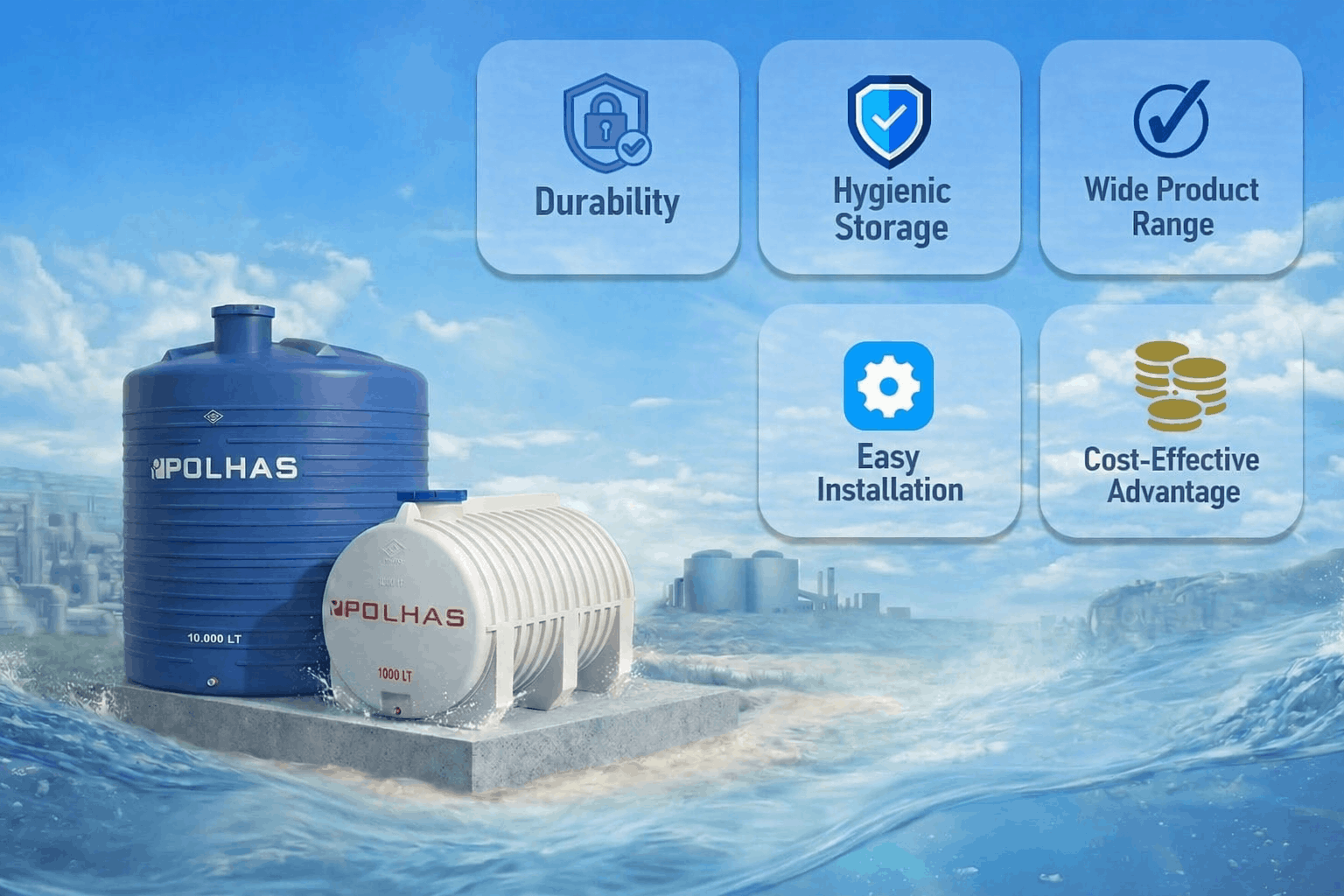
Water tank installation is a very important step for long-lasting and efficient use. Proper placement affects many factors, from preserving water quality to extending the lifespan of the tank. Polhas water tanks provide long-term use thanks to their strong and durable structure; however, their performance increases even further when installed correctly. Below are the most important points you should know about water tank installation:
1. Choosing a Flat and Solid Ground
The most important step in water tank installation is preparing a flat and solid ground. The tank must stand stable by evenly distributing the load it carries. If the ground is sloped or unstable, the tank may settle unevenly and deform over time. Therefore, especially for large-capacity water tanks, a strong and level surface should be preferred.
2. Protection from Sunlight
Water tanks can heat up when exposed directly to sunlight, which may cause deterioration in water quality. Although Polhas water tanks are manufactured with UV-resistant materials, choosing a location where shading can be provided will be beneficial whenever possible. This helps keep the water cooler and fresher.
3.Easy Access and Maintenance
When positioning a water tank, ensuring easy access is extremely important. The tank should be accessible for regular cleaning and maintenance. During installation, it is important to choose a location that allows practical filling and draining of the tank. In addition, sufficient clearance should be left around the tank for potential maintenance or repairs.
4.Water Tank Installation
Another important point during installation is proper mounting and securing. The water tank should be firmly fixed to the ground and positioned to prevent movement. Although Polhas water tanks are designed for easy installation, it is essential to follow securing recommendations to ensure stability during setup.
5. Keeping Away from Contaminating Substances
When selecting the location of the water tank, it should be kept away from substances that may contaminate the water. Keeping the tank away from chemicals, waste, or polluted
water sources helps maintain water quality. Regular cleaning of the surrounding area also contributes to maintaining hygiene.
6. High-Humidity Environments
It is important not to place water tanks in areas with high humidity. Otherwise, the risk of algae or bacterial growth on the tank increases. Choosing a well-ventilated location away from excessively humid environments ensures healthier water storage.
7. Location Selection According to Tank Type
Different tank types offer different placement options. Vertical water tanks are generally preferred for narrow spaces, while horizontal water tanks can be more efficient in wider areas. When choosing the installation location based on tank type, the size of the area and the amount of water usage should be taken into consideration.